



Read more on how fall weather affects window and door seals.
The good news is that many fall window maintenance tasks are simple. You do not need to be a contractor to spot obvious warning signs. You just need to know what to look for, what can be handled with basic maintenance, and when it may be time to call a professional.
Here are practical fall window maintenance tips to help keep your home warmer, drier, and more comfortable before winter settles in.
Why Fall Window Maintenance Matters in Ontario
Ontario weather can be tough on windows and doors. During the fall, temperatures begin to swing between mild afternoons and cold evenings. By winter, windows may face freezing temperatures, snow, ice, wind, and indoor humidity from heating systems and daily activities.
When windows are in good condition, they help keep your home comfortable. When they are damaged, poorly sealed, or outdated, they can let heat escape and cold air enter.
Natural Resources Canada notes that windows, doors, and skylights can account for up to 35 percent of total house heat loss. That is a big deal for homeowners heading into the cold season. Even if your furnace is working well, old or leaking windows can make the home feel uncomfortable and less efficient.
Fall maintenance helps you catch problems before winter makes them worse. It can also help you decide whether a window needs a simple fix, professional repair, or full replacement.
Fall Window Maintenance Checklist
Use this checklist as a starting point before the first deep freeze. It can help you inspect each window in a clear and organized way.
| What to Check | What to Look For | Why It Matters |
|---|---|---|
| Glass | Cracks, fog between panes, chips, or damage | Damaged glass can reduce comfort and may get worse in winter |
| Frames | Warping, soft spots, rot, gaps, or movement | Weak frames can allow air and moisture to enter |
| Weatherstripping | Loose, cracked, flattened, or missing seals | Worn seals can create drafts |
| Caulking | Cracked, missing, or separated caulking around the exterior | Damaged caulking can allow water and air leaks |
| Tracks | Dirt, leaves, dust, bugs, or debris | Debris can make windows harder to open and close |
| Locks and hardware | Loose locks, stiff handles, or broken parts | Working locks help with comfort, security, and sealing |
| Condensation | Water on glass, sills, or around the frame | Excess moisture can lead to damage if ignored |
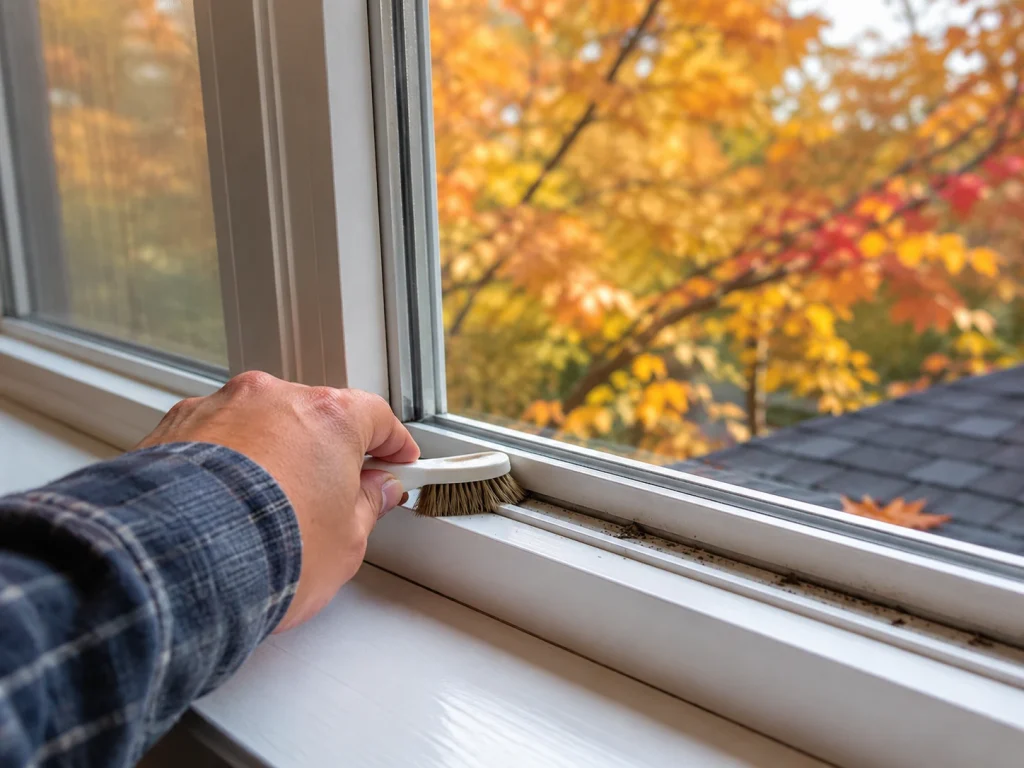
1. Clean the Glass, Frames, and Window Tracks
Start with a basic cleaning. Clean windows are easier to inspect, and clean tracks help windows open and close properly.
Use a soft cloth, mild soap, and water to clean the glass and frames. Avoid harsh cleaners or abrasive tools that could damage the finish. For window tracks, use a vacuum with a small attachment to remove dust, leaves, and debris. A soft brush can help loosen anything stuck in the corners.
This is especially important for sliding windows, hung windows, and patio doors, where dirt can build up in the tracks. If the track is blocked, the window or door may not close tightly. That can lead to drafts and poor sealing in winter.
Do not forget the window sill. The sill is the flat surface at the bottom of the window. If water sits there for too long, it can damage paint, trim, drywall, or wood.
2. Check for Drafts Around Each Window
A draft is unwanted air coming into the home through gaps or weak seals. In the fall, check for drafts before the weather gets too cold.
Walk around each room and place your hand near the window frame. If you feel cool air moving in, there may be an air leak. Pay close attention to corners, edges, and the bottom of the window.
You can also look for visual signs, such as moving curtains, dust patterns near the frame, or uneven room temperatures. If one room always feels colder than the others, the windows may be part of the problem.
Some drafts can be fixed with new weatherstripping or caulking. However, if the window is old, warped, damaged, or no longer closing properly, replacement may be the better long-term option.
If you are unsure whether a window should be replaced, AZTech’s guide on replacing windows can help you understand what to consider.
3. Inspect the Weatherstripping
Weatherstripping is the material around the window that helps seal the gap between moving parts. When it is in good condition, it helps stop drafts. When it is worn out, flattened, cracked, or missing, cold air can enter the home more easily.
Open and close each window. Look along the edges and check whether the weatherstripping is still flexible and properly attached. If it looks brittle, damaged, or loose, it may need to be replaced.
This is a small detail that can make a big difference during winter. A window does not need a large opening to create a noticeable draft. Even small gaps can affect comfort when the temperature drops.
For older windows, worn weatherstripping may be only one part of a bigger issue. If the frame is also warped, the glass is foggy, or the window no longer locks tightly, it may be time to explore window replacement.
4. Look at Exterior Caulking Before Winter
Caulking is the sealant used around the outside edges of windows and doors. It helps keep water and air from entering the home. Over time, caulking can dry out, crack, shrink, or pull away from the surface.
Fall is a smart time to inspect exterior caulking because winter can make these problems worse. Water can enter small cracks, freeze, expand, and create more damage. This is common in climates with freeze-thaw cycles, where temperatures move above and below freezing.
Walk around the outside of your home and inspect the caulking around each window. Look for cracks, gaps, peeling, or missing sections. If you find small areas of damage, they may be repairable. If the damage is widespread or connected to frame movement, water staining, or rot, it is better to get a professional opinion.
5. Watch for Condensation and Moisture
Condensation happens when warm indoor air meets a cold surface, such as window glass. Some condensation can happen during winter, especially when indoor humidity is high. Humidity means the amount of moisture in the air.
A little condensation on the glass may not always mean the window is failing. However, heavy condensation, water pooling on the sill, mold-like spots, peeling paint, or soft trim should not be ignored.
Health Canada recommends addressing indoor moisture because moisture can contribute to mold growth. Health Canada also advises homeowners to check window sills regularly for condensation or moisture during colder months.
The Canada Mortgage and Housing Corporation explains that mold needs moisture to grow, and moisture can come from daily activities or from water entering through cracks and leaks.
If you see frequent moisture around windows, check more than the glass. Look at indoor humidity, bathroom ventilation, kitchen exhaust, exterior drainage, and whether the window itself is leaking or failing.
6. Test Locks, Handles, Hinges, and Moving Parts
A window that does not lock properly may not seal properly. This can affect comfort, security, and energy performance.
Before winter, open and close each window. Check whether the handle feels secure. Test the lock. Look at hinges and moving parts. If the window sticks, grinds, refuses to close fully, or feels loose, it needs attention.
For sliding windows and patio doors, make sure the track is clean and the unit moves smoothly. If the unit does not close all the way, you may feel drafts even when it looks shut.
Some hardware issues are minor. Others may point to a larger problem, such as a warped frame, damaged sash, or old window that no longer fits correctly. The sash is the part of the window that holds the glass and moves when the window opens.
7. Inspect Exterior Doors at the Same Time
Windows are not the only areas that can leak air. Exterior doors, patio doors, and storm doors should also be checked in the fall.
Look around the edges of each exterior door. Check the weatherstripping, door sweep, threshold, glass inserts, and frame. The door sweep is the strip at the bottom of the door that helps block air from coming in underneath. The threshold is the bottom part of the doorway that the door closes against.
If you can see daylight around the door, feel drafts, or notice water staining near the frame, the door may not be sealing properly.
Sometimes weatherstripping or a door sweep can be replaced. If the door is dented, warped, rotting, badly weathered, or no longer secure, it may be time to consider exterior door replacement. Homeowners looking to update both appearance and performance can also explore fiberglass doors or steel doors.
8. Clean and Store Window Screens
Fall is also a good time to clean and inspect window screens. Screens collect dust, pollen, leaves, and debris during spring and summer. If they are left dirty all winter, that buildup can become harder to remove later.
Remove screens carefully, rinse them with mild soap and water, and let them dry fully before storing them. Check for rips, bent frames, or loose corners.
Some homeowners remove screens during winter to improve airflow near the glass and reduce places where dust and moisture collect. If you do remove them, store them upright in a dry area where they will not be bent or damaged.
9. Check the Roof, Gutters, and Downspouts
Even though this article focuses on windows and doors, fall home maintenance should also include the roof and gutters. Water problems around windows can sometimes begin above the window, not at the window itself.
Clogged gutters can cause water to overflow and run down exterior walls. Damaged downspouts can send water too close to the foundation. Missing shingles, damaged flashing, or roof issues can also allow water to travel into places it should not.
Before winter, make sure gutters are clear, downspouts are directing water away from the house, and roof issues are addressed. If you are not comfortable checking the roof yourself, hire a professional. Safety first, ladder drama is not worth it.
10. Book Furnace or HVAC Maintenance Before the Cold Hits
Your windows and doors help control heat loss, but your heating system still needs to work properly. Fall is a good time to inspect or service your furnace before the busy winter season.
ENERGY STAR recommends regular heating and cooling maintenance, including changing air filters and scheduling yearly tune-ups. A clean and well-maintained heating system can help improve comfort and efficiency.
If your furnace is working harder because of old windows and doors, you may notice uneven temperatures, high heating bills, or rooms that never feel warm enough. In that case, both the heating system and the windows should be looked at.
Fall Maintenance: Repair or Replace?
Not every window problem means you need full replacement. Some issues can be repaired, especially if the window is newer and the damage is minor.
However, replacement may be the better option when the same problems keep coming back or when the window is too old to perform well.
| Problem | Possible Repair | When Replacement May Be Better |
|---|---|---|
| Minor draft | Replace weatherstripping or seal a small gap | The frame is warped or the window no longer closes tightly |
| Small caulking gap | Remove old caulking and reseal properly | There is water damage, rot, or movement around the frame |
| Dirty or stiff tracks | Clean and lubricate moving parts | The window still sticks or will not lock after cleaning |
| Condensation on room-side glass | Manage indoor humidity and ventilation | There is moisture between panes of glass |
| Broken hardware | Replace a handle, hinge, or lock | The window system is old and multiple parts are failing |
| Cracked glass | Professional glass repair may be possible | The frame is also damaged or the window is outdated |
If your windows are older, drafty, foggy between panes, difficult to use, or showing signs of water damage, it may be time to plan a replacement before winter gets worse.
Best Time to Plan Window Replacement Before Winter
Fall can be a practical time to plan window replacement because problems are easier to spot before the coldest weather arrives. If you already noticed drafts last winter, condensation around the glass, or rooms that were hard to keep warm, do not wait until the first major cold snap to investigate.
For homeowners across Toronto, Burlington, Oakville, Vaughan, Mississauga, and the surrounding GTA, booking early can also make scheduling easier before winter demand increases.
If you are planning a project and want a starting point for budget planning, AZTech’s Windows Calculator can help you create a rough estimate before booking a professional quote.
Simple Fall Window Maintenance Checklist for GTA Homes
Here is a quick checklist you can use every fall:
- Clean window glass, frames, tracks, and sills
- Check each window for drafts
- Inspect weatherstripping for cracks or gaps
- Look at exterior caulking around each window
- Watch for condensation, water stains, or mould-like spots
- Test locks, handles, hinges, and moving parts
- Inspect patio doors and exterior doors
- Clean and store screens if needed
- Clear gutters and downspouts
- Schedule furnace or HVAC maintenance before winter
- Call a professional if windows are leaking, damaged, foggy, or no longer sealing properly
Get Your Windows Ready Before Winter
Fall is the right time to inspect your windows and doors before Ontario winter puts them to the test. A little maintenance can help your home feel warmer, drier, and more comfortable. It can also help you catch small issues before they become expensive problems.
Start with cleaning, draft checks, weatherstripping, caulking, moisture control, and hardware testing. Then look at the bigger picture. If your windows are old, drafty, damaged, foggy, or hard to operate, replacement may be the better long-term solution.
AZTech Doors & Windows helps homeowners across Toronto, Vaughan, Mississauga, Oakville, Burlington, Markham, Richmond Hill, and the surrounding GTA with professional window and door replacement. To prepare your home for the colder months, explore our window replacement services, review our door replacement options, or contact us to request a quote.