



That is why patio door replacement is about much more than appearance.
For homeowners across Toronto, Vaughan, Mississauga, Markham, Richmond Hill, Oakville, Burlington, and the surrounding GTA, a well-selected patio door should provide easy operation in summer, a tight seal in winter, useful security, good natural light, and energy performance suited to the Canadian climate.
If your existing door sticks, leaks air, lets water in, feels unusually cold around the glass, or no longer locks properly, it may be time to look beyond another temporary repair.
This guide explains what GTA homeowners should consider before replacing a patio door, from the type of door and glass package to installation, security, and energy efficiency.
Why Patio Doors Deserve More Attention Than They Usually Get
Patio doors can take up a significant portion of an exterior wall. Compared with a standard entry door, they usually contain much more glass and have larger moving components.
That creates a few important considerations.
The door needs to:
- Slide or swing smoothly
- Seal tightly around a large opening
- Resist water and air infiltration
- Keep the moving panel aligned
- Provide a secure locking point
- Manage summer solar heat
- Limit winter heat loss
- Continue operating as temperatures change
Natural Resources Canada notes that windows and doors can account for a significant share of a home’s energy loss. It also recognizes sliding glass doors within Canada’s residential fenestration energy-efficiency standards.
In other words, a patio door is not simply a large piece of glass leading to the backyard. It is part of the home’s building envelope and needs to perform like one.
Signs It May Be Time to Replace Your Patio Door
Not every patio door problem requires full replacement. Tracks can be cleaned, rollers can sometimes be adjusted, and worn weatherstripping may be replaceable.
However, several problems together usually indicate that the entire system should be assessed.
The Door Is Becoming Difficult to Open or Close
A properly functioning sliding patio door should move smoothly without requiring excessive force.
If you are pulling hard on the handle, lifting the panel to get it moving, or repeatedly pushing it back into alignment, something is wrong.
Possible causes include:
- Worn rollers
- Damaged tracks
- A frame that is no longer square
- Seasonal movement
- Warped components
- Previous installation issues
Natural Resources Canada specifically notes that years of use, poor installation, seasonal warping, and shifting can cause sliding patio doors to move out of square with their frames.
A minor adjustment may solve an isolated roller issue. A distorted or deteriorated frame is a different problem.
Homeowners dealing with several of these issues can also compare the features available with modern sliding patio doors, including improved rollers, weatherstripping, locking systems, and energy-efficient glazing.
You Feel a Draft Around the Door
Stand near an older patio door on a cold, windy day and you may notice a clear temperature difference.
Some feeling of coolness near a large glass area is normal, particularly with older glazing. A noticeable stream of cold air around the frame, meeting rails, or sill is not.
Air can enter through:
- Failed weatherstripping
- Gaps around the frame
- Poorly aligned panels
- Damaged seals
- Weak installation around the rough opening
Natural Resources Canada identifies doors as one of the common air-leakage areas in a home and emphasizes air sealing as an important part of energy performance.
If the door has to be covered with towels or temporary plastic every winter, replacement deserves serious consideration.
There Is Fogging Between the Glass Panes
Condensation on the room-side surface of glass is different from fog or moisture trapped between panes.
When moisture appears inside a sealed insulating glass unit, it can indicate that the edge seal has failed.
The glass may still be intact, but its insulating system is no longer performing as intended.
For an older patio door, replacing only the glass may not make sense if the rollers, frame, locks, and weatherstripping are also nearing the end of their useful life.
Water Appears Around the Sill
Water around a patio door should never be ignored.
The source may be the door, flashing, exterior drainage, grading, sealant, or another part of the wall assembly.
If water enters during wind-driven rain, a professional should determine where it is getting through before cosmetic repairs are made indoors.
Long-term moisture can damage trim, flooring, drywall, framing, and insulation.
The Lock No Longer Feels Secure
A patio door is also an exterior access point.
A loose latch, damaged keeper, deteriorated frame, or door that can be lifted excessively within the track can reduce security.
Modern patio doors can include multi-point or dual-point locking systems, optional keyed handles, and secondary security locks. AZTech’s sliding patio door systems include configurations with twin-point locks and optional secondary locking hardware.
The Door Is Decades Old
Age alone does not automatically mean replacement is necessary.
However, an older patio door may combine several outdated features:
- Basic double glazing or older glass
- Limited Low-E protection
- Less efficient frames
- Worn seals
- Older rollers
- Basic locking hardware
If several components are already underperforming, replacing the complete system may provide a more meaningful improvement than repairing one piece at a time.
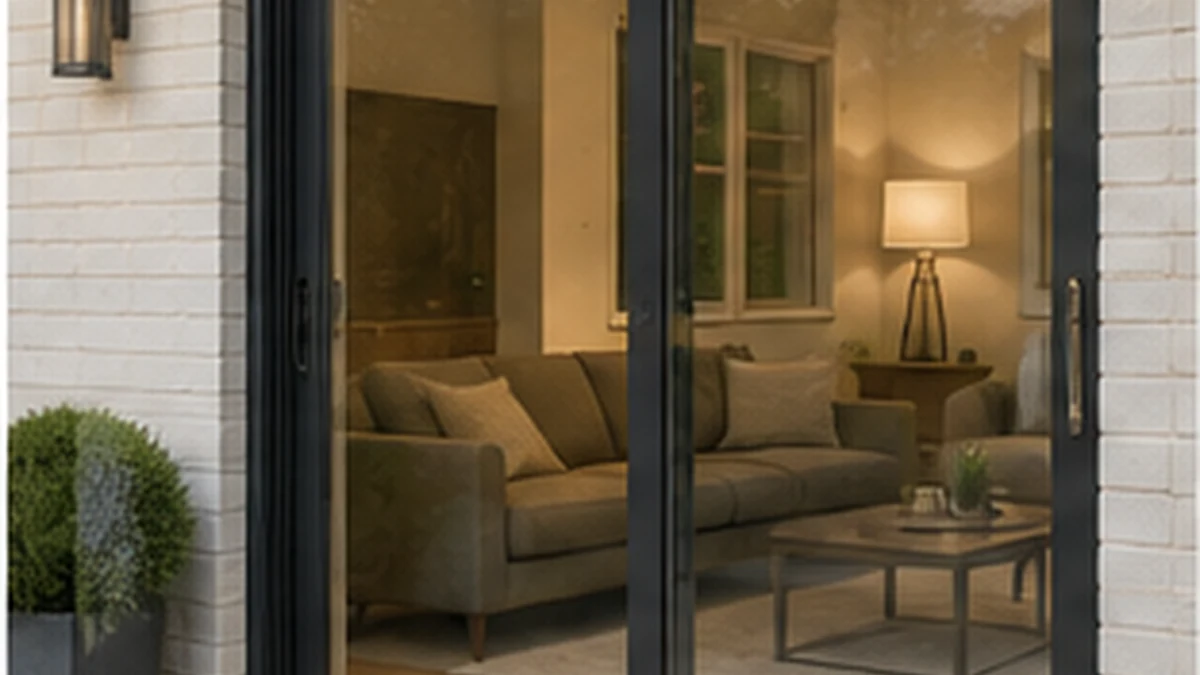
Sliding Patio Doors vs. Garden or French Doors
One of the first decisions is whether you want another sliding door or a different patio-door configuration.
Sliding Patio Doors
Sliding patio doors remain popular across the GTA because they use space efficiently.
The panels move horizontally instead of swinging into the room or onto the deck. That makes them particularly useful where furniture, steps, railings, or outdoor seating limit available clearance.
Advantages include:
- Large glass area
- Strong connection between indoor and outdoor spaces
- No swing clearance required
- Easy screen integration
- Multiple panel configurations
- Good option for wider openings
Modern systems can also be built much larger than the traditional two-panel patio doors found in many older GTA homes.
AZTech offers sliding patio doors with multiple glass, hardware, colour, and configuration options.
Garden and French-Style Doors
Hinged patio doors offer a more traditional appearance.
Depending on the configuration, one or both panels may operate. They can work particularly well with classic home styles or when the homeowner wants the patio entrance to feel more like a conventional doorway.
Homeowners considering this style can compare AZTech’s swinging garden doors with sliding systems to determine which configuration works better for the available space.
The tradeoff is space.
A hinged door requires room for the panel to swing, so furniture placement and deck or patio clearance need to be considered.
Stacking and Multi-Panel Doors
Larger openings can use multi-panel sliding or stacking systems to create a wider connection between the interior and exterior.
These are attractive for renovations with large decks, pools, or open-concept living spaces, but the opening needs to be assessed structurally and the installation becomes more involved.
For homeowners looking to create a much larger indoor-outdoor opening, moving glass wall systems provide another option beyond a conventional patio door.
For many existing GTA homes, however, a properly sized two- or three-panel sliding system remains the most practical balance of glass area, usability, and cost.
What to Look for in a New Patio Door
Two doors can look very similar in a showroom but perform quite differently once installed.
The details matter.
1. Energy-Efficient Glass
Because patio doors contain so much glass, the glazing package deserves close attention.
Modern insulating glass can include:
- Multiple panes
- Low-emissivity coatings
- Argon or another inert gas between panes
- Warm-edge spacer systems
- Different solar heat gain characteristics
Natural Resources Canada recommends looking for energy-efficient fenestration products and notes that special Low-E coatings, insulated frames, and gas fills can improve performance.
The goal is not simply to choose “the strongest glass package.”
The right glass should suit the home’s orientation and how the room is used.
A west-facing patio door exposed to intense afternoon sun may benefit from stronger solar control than a shaded north-facing door.
Natural Resources Canada cautions that windows and sliding glass doors with higher solar heat gain can make south- and west-facing rooms uncomfortably warm when there is a large amount of glass.
2. Frame Construction
The frame supports the glass, tracks, locks, and moving panels.
Look beyond surface appearance and ask how the frame is designed to manage heat transfer, structural loads, and weather exposure.
AZTech’s vinyl sliding patio doors use multi-chambered profiles designed to resist heat and cold transfer, along with perimeter weatherstripping and interlocking rails.
For GTA homeowners, frame stability is particularly important because the product has to operate through hot, humid summers and freezing winters.
3. Rollers and Tracks
A patio door can have excellent glass and still become frustrating if the moving hardware is poor.
Quality rollers and a properly aligned track should allow the panel to move smoothly without rocking or binding.
During a consultation, ask:
- What type of roller system is used?
- Can rollers be adjusted?
- What warranty applies to the hardware?
- How easy is the track to clean?
- Can replacement hardware be serviced later?
Heavy glass panels place significant loads on moving hardware, so this is not an area to treat as an afterthought.
4. Weatherstripping
Weatherstripping is one of the quiet heroes of a patio door.
When the door closes, the panels need to create a consistent seal around the frame and where they meet.
Damaged, undersized, or poorly aligned weatherstripping can allow air, moisture, dust, and insects into the home.
Check how the door seals at:
- The head
- Side jambs
- Sill
- Meeting rails
- Interlocking panels
A new patio door should not need improvised winter sealing to feel comfortable.
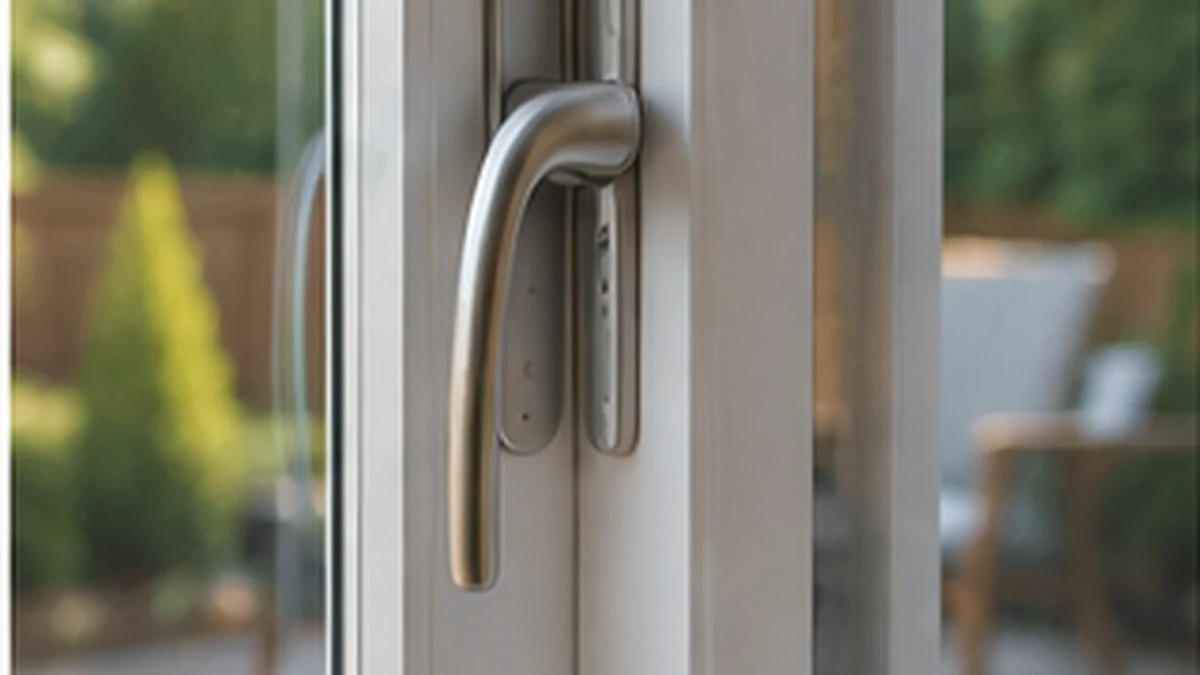
5. Locking Hardware
Look for locking hardware that secures the moving panel firmly to the frame.
Depending on the system, homeowners may choose:
- Multi-point locking
- Keyed exterior handles
- Secondary foot locks
- Top bolts
- Reinforced keepers
The right option depends on how the door is used.
A backyard door that serves as a family’s main daily entrance may need different hardware than a door that is rarely opened.
6. Screen Quality
In Ontario, patio-door screens get heavy use from late spring through early fall.
A screen should move smoothly, remain square, and be easy to remove or service.
If you have pets, children, or frequent backyard traffic, ask about stronger screen options.
A screen that constantly jumps off its track turns a nice patio door into a weekly argument with an aluminum rectangle.
7. Configuration and Opening Size
Do not assume the replacement has to copy the old configuration exactly.
Depending on the opening, homeowners may be able to consider:
- Two-panel doors
- Three-panel doors
- Four-panel systems
- Centre-opening configurations
- Larger stacking systems
- Integrated sidelites or transoms
This is particularly useful during larger kitchen or rear-of-home renovations.
A consultation should consider both how the opening looks and how people actually move through it.
If the patio door is part of a larger exterior renovation, AZTech’s exterior door replacement services provide additional options for coordinating patio, front, side, and backyard entrances.
Patio Door Options at a Glance
| Feature | Why It Matters |
|---|---|
| Low-E insulating glass | Helps manage heat transfer and solar gain |
| Multi-chamber frame | Improves insulation and structural performance |
| Quality rollers | Supports smooth, reliable operation |
| Continuous weatherstripping | Helps limit drafts and water infiltration |
| Multi-point locking | Improves security and panel alignment |
| Durable screen | Makes summer ventilation more practical |
| Correct configuration | Improves traffic flow and usable opening space |
| Professional installation | Integrates the door properly with the wall assembly |
Why Installation Matters So Much
A high-performance patio door cannot compensate for poor installation.
The door has to be installed square, level, securely fastened, insulated around the opening, properly sealed, and integrated with the surrounding wall so water is directed to the exterior.
The National Research Council of Canada emphasizes that window and door installation details need to integrate structural, air, vapour, and moisture-control functions with the building envelope.
Natural Resources Canada also recommends professional installation so windows and doors can perform as designed.
Installation problems can show up as:
- Hard operation
- Air leakage
- Water intrusion
- Uneven gaps
- Lock alignment problems
- Premature seal or hardware wear
This is why comparing patio-door quotes solely by product price can be misleading.
Ask what is included around the door, not just which door is being supplied.
What Affects Patio Door Replacement Cost?
There is no useful one-price answer for patio door replacement because several variables influence the project.
The main factors include:
Door Size
Larger doors require more glass, larger frames, stronger hardware, and more labour to handle safely.
Number of Panels
A standard two-panel slider generally differs in cost from a three-panel or large stacking system.
Glass Package
Upgraded Low-E coatings, higher-performance insulating glass, laminated options, and other specialty glazing affect price.
Colour and Finish
Standard white is generally the simplest option. Custom exterior and interior finishes can add cost.
Hardware
Upgraded handles, keyed locks, secondary security features, and decorative finishes may change the final price.
Existing Opening
Replacing a door in a sound, correctly sized opening is different from rebuilding damaged framing or changing the opening size.
Installation Conditions
Second-storey decks, tight access, masonry changes, interior trim work, and exterior finishing can all affect labour.
The best approach is to compare quotes based on the complete scope rather than a headline price.
Is Late Summer a Good Time to Replace a Patio Door in the GTA?
For many homeowners, yes.
Late summer and early fall offer a useful window for patio-door replacement because problems are easy to notice while the door is still being used frequently.
You may already know that:
- The rollers are getting worse
- The screen is failing
- Afternoon sun overheats the room
- The lock is unreliable
- Rain is getting near the sill
Addressing these issues before colder weather arrives can also prevent another winter of drafts or difficult operation.
That said, patio doors can be replaced during other seasons as well. The right timing depends on product availability, project scope, weather, and your renovation schedule.
Questions to Ask Before Ordering a Patio Door
Before signing a contract, ask:
- What patio-door system is being quoted?
- What glass package is included?
- Is the product ENERGY STAR certified?
- What type of Low-E coating is recommended for this side of the house?
- What locking hardware is standard?
- Are secondary locks available?
- What screen is included?
- What interior and exterior finishing is included?
- How will the opening be insulated and sealed?
- What warranties cover the frame, glass, hardware, and installation?
You can also review AZTech’s window and door warranty when comparing what is covered after installation.
A detailed quote makes it easier to compare contractors fairly.
Choosing the Right Patio Door for Your GTA Home
The best patio door is not necessarily the largest or most expensive option.
It is the system that fits the opening properly, works with the home’s layout, provides the right amount of glass and ventilation, seals reliably, and performs through Ontario’s temperature swings.
If your current patio door is difficult to operate, drafty, fogged, leaking, or simply outdated, AZTech Doors & Windows can assess the opening and help you compare suitable replacement options.
AZTech supplies and installs patio doors and provides broader exterior door replacement services across Toronto, Vaughan, Mississauga, Markham, Richmond Hill, Oakville, Burlington, and surrounding communities.
Before ordering, focus on the whole system: glass, frame, rollers, weatherstripping, locks, configuration, and installation. That is what determines whether a patio door still feels good five winters from now, not just five minutes after installation.
If you are considering a patio door replacement for your GTA home, contact AZTech Doors & Windows to discuss your options and arrange an estimate.