



A Greater Toronto Area Homeowner’s Guide
Winter in the GTA is not gentle. Between lake-effect snow, deep freezes, salt spray, and sudden thaw cycles, your windows and doors take a beating every single year.
From Vaughan and Richmond Hill to Mississauga, Markham, North York, Brampton, and Aurora, homes experience:
- Heavy snow loads
- Ice buildup
- Rapid temperature swings
- High winds
- Freeze–thaw cycles
Read more why your windows ice up in extreme cold weather.
And here’s the reality: a lot of winter damage goes unnoticed until spring… when drafts, leaks, and rising energy bills start creeping in.
Let’s break down the signs that winter may have damaged your windows and doors, what causes it, and what to do next.
Why Winter Is So Hard on Windows and Doors
Before we look at damage, let’s understand what actually happens.
1. Freeze–Thaw Cycles
When temperatures bounce above and below zero, water expands as it freezes. This expansion puts pressure on frames, seals, and surrounding materials.
According to the National Research Council Canada, repeated freeze–thaw cycles are a major cause of building envelope deterioration in cold climates.
Building envelope simply means everything that separates your home’s interior from the exterior: windows, doors, walls, and roof.
2. Thermal Expansion and Contraction
Materials expand in heat and contract in cold. Vinyl, aluminum, wood, and even glass all move at different rates.
The Canada Mortgage and Housing Corporation explains that extreme temperature differences can cause:
- Seal failures
- Frame warping
- Cracks in caulking
- Reduced airtightness
3. Condensation and Moisture Intrusion
Moisture is the silent killer.
When warm indoor air meets cold glass, condensation forms. If not managed properly, that moisture can damage frames, trim, and insulation.
Natural Resources Canada notes that air leakage around windows and doors significantly affects energy efficiency in Canadian homes.
Read more on condensation on windows in winter.
10 Signs Winter Damaged Your Windows
Let’s get practical. Here are the most common warning signs we see across the GTA.
1. Drafts Near Windows or Doors
If you feel cold air near your windows even when they’re closed, that’s a red flag.
What Causes It: Seal shrinkage · Weatherstripping damage · Frame movement · Cracked caulking
Why It Matters: Drafts increase heating costs and reduce comfort.
| Symptom | What It Means | Risk Level |
|---|---|---|
| Cold air near the frame | Seal failure | Moderate |
| Whistling sound | Gap in frame | High |
| Curtains moving | Air infiltration | High |
Air infiltration means outside air is entering your home through small gaps.
2. Condensation Between Glass Panes
If you see fog or moisture trapped inside your double or triple-pane window, the insulated glass unit has failed.
What Is an Insulated Glass Unit (IGU)? An IGU is the sealed glass system in modern windows. It contains: Two or three panes of glass · Spacer bar · Argon gas for insulation · Airtight seal. When that seal breaks, moisture enters.
| Sign | Likely Cause | Repair Option |
|---|---|---|
| Fog inside the glass | Seal failure | Glass replacement |
| Water droplets | Advanced failure | Replace unit |
| Frost inside the pane | Severe seal damage | Replace unit |
This is extremely common in older homes in Thornhill, Maple, and Woodbridge.
3. Cracked or Peeling Caulking
Caulking is the flexible seal around your window or door frame. Winter temperature swings cause it to shrink and crack.
| What You See | What’s Happening |
|---|---|
| Gaps in sealant | Water can enter |
| Brittle material | UV and cold damage |
| Missing sections | Air leakage risk |
Left untreated, this can lead to mold and structural rot.
4. Difficulty Opening or Closing Windows
If your windows stick or don’t close smoothly, winter may have shifted the frame.
Possible Causes: Frame expansion and contraction · Hardware corrosion from moisture · Ice damage. Homes in Brampton and Newmarket often experience this due to extreme temperature swings.
5. Warped or Swollen Frames
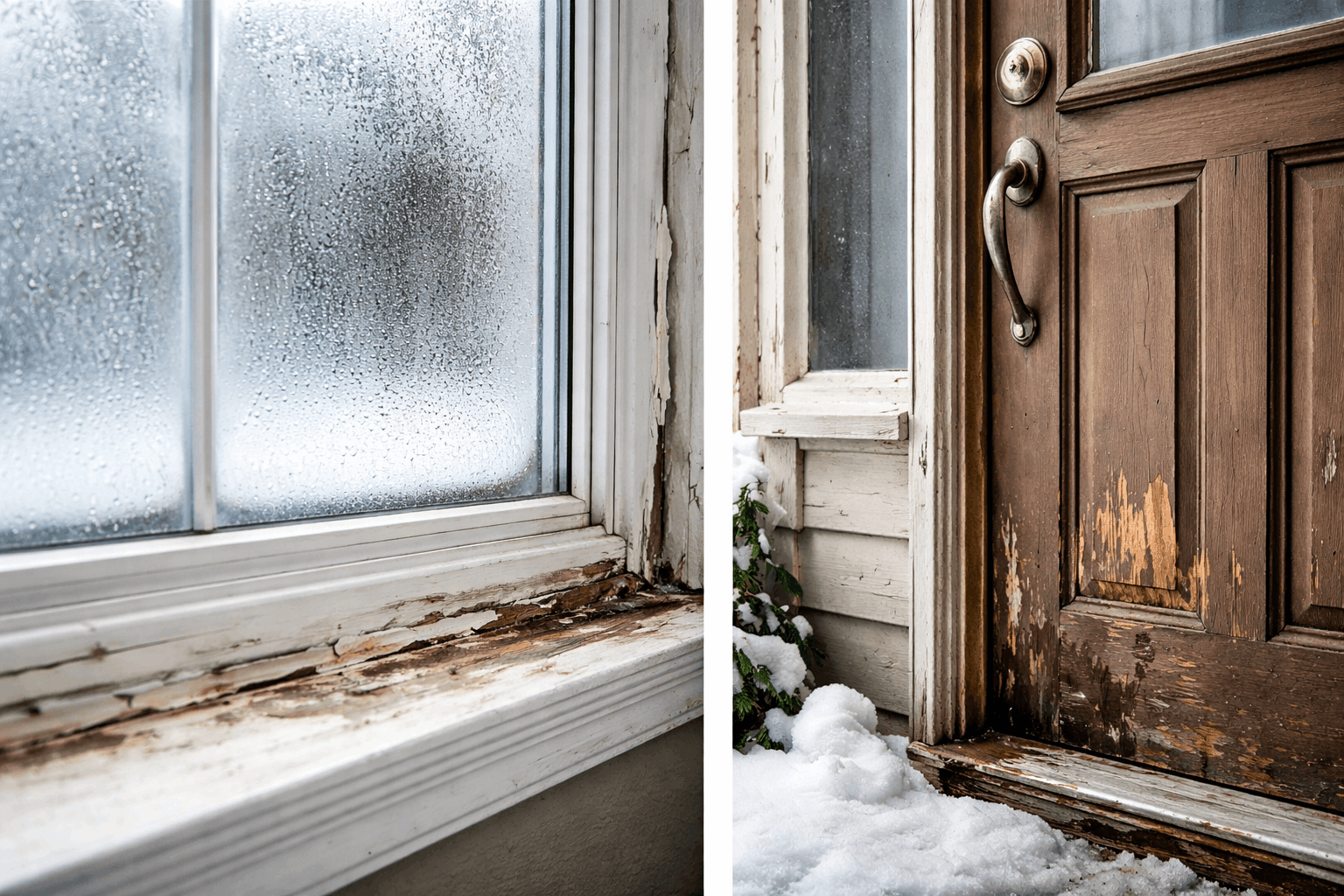
Wood frames are especially vulnerable. Moisture absorption during winter can cause swelling. When it dries out in spring, cracking may occur.
| Frame Type | Winter Risk |
|---|---|
| Wood | High |
| Vinyl | Moderate |
| Aluminum | Low to Moderate |
6. Ice Buildup Along the Interior Frame
If you see ice forming inside your window frame, that means significant heat loss and air leakage. This often happens in older homes in North York and Scarborough. It signals poor insulation or seal failure.
7. Visible Water Stains Around Window Trim
Brown or yellow stains on drywall near windows are a warning sign. This means moisture has been penetrating behind the frame. That can lead to: Mold growth · Rotting sheathing · Structural deterioration
8. Increased Heating Bills
If your heating costs jumped this winter and nothing else changed, your windows or doors may be underperforming. According to Natural Resources Canada, air leakage can account for up to 25 percent of heat loss in older homes.
9. Rusted or Corroded Hardware
Door hinges and window operators exposed to condensation can corrode. Salt from winter air in areas near Mississauga and Etobicoke can accelerate this process.
10. Cracks in Glass
Rapid temperature shifts can stress glass. Even hairline cracks weaken the window and compromise insulation.
Signs Winter Damaged Your Exterior Doors
Doors take direct exposure to snow, ice, and wind. Here’s what to look for.
- 1. Door Drafts – If you feel cold air near your entry door, the weatherstripping may have failed. Weatherstripping is the rubber or foam material that seals the door edges.
- 2. Light Visible Around Door Frame – If you can see daylight around your door, it’s not sealing properly. This is common in older homes in Vaughan and Richmond Hill.
- 3. Swollen Wooden Doors – Wood absorbs moisture and expands. When spring comes, the door may shrink and crack.
- 4. Peeling Paint or Finish – Winter moisture can cause paint to bubble or peel. This exposes the door to further damage.
- 5. Rot at the Bottom of the Door – The bottom rail of a door is most exposed to snow and ice. Check for softness or crumbling material.
Winter Damage Risk Comparison Table
| Issue | Short-Term Impact | Long Term Risk | Action Needed |
|---|---|---|---|
| Drafts | Discomfort | Higher energy bills | Seal or replace |
| Seal failure | Fogging | Insulation loss | Replace glass |
| Water stains | Cosmetic | Mold and rot | Immediate repair |
| Warped frame | Operation issues | Structural stress | Inspection |
| Door gaps | Heat loss | Frame damage | Adjust or replace |
When Is It Time to Replace Instead of Repair?
Here’s a simple rule:
- Minor caulking cracks → Repair
- Single failed glass unit → Replace glass
- Multiple failures + drafts → Replace window
- Frame rot → Replace window or door
If your windows are 15–20 years old, replacement may be more cost-effective long term.
Why GTA Homes Are Especially Vulnerable
The Greater Toronto Area has: High humidity swings · Lake-effect snow · Salt exposure · Rapid temperature changes. Homes in Aurora, King City, and Stouffville often experience strong wind exposure in open areas. Urban homes in Toronto and Etobicoke experience more salt corrosion. Each micro-climate creates unique stress.
How to Prevent Future Winter Damage
- Inspect Every Fall – Check seals, caulking, and weatherstripping.
- Replace Worn Weatherstripping – It’s inexpensive and highly effective.
- Upgrade to Energy-Efficient Windows – Look for: Low-E glass (reflects heat) · Argon gas-filled units · Multi-chamber vinyl frames.
- Maintain Proper Indoor Humidity – Keep humidity around 30–40 percent in winter.
Quick Homeowner Checklist
- ☐ Do you feel drafts?
- ☐ Is there fog between panes?
- ☐ Are frames cracked or warped?
- ☐ Is paint peeling on doors?
- ☐ Did heating bills rise unusually?
If you checked two or more, it’s worth a professional inspection.
Final Thoughts
Winter damage often hides in plain sight.
What starts as a small crack or seal issue can turn into: Mold problems · Structural rot · High heating bills · Reduced home value.
Across Vaughan, Markham, Richmond Hill, North York, Mississauga, and the entire GTA, we see these issues every spring.
The good news? Most problems can be identified early and corrected before they become expensive repairs.
Check Your Windows and Doors Before the Next Winter
Winter damage does not always show up right away. Small drafts, minor leaks, or subtle frame movement can quickly turn into larger problems if they are ignored.
If you noticed any of the signs mentioned in this guide, it may be time to have a professional take a closer look.
Aztech Doors & Windows helps homeowners across the Greater Toronto Area including Vaughan, Richmond Hill, Markham, North York, Mississauga, and Brampton identify winter damage and recommend the right solution.
Sometimes a repair is enough. In other cases, a window replacement can improve comfort, security, and energy efficiency.
A professional inspection can help you avoid higher energy bills and prevent more costly damage in the future.
Request a consultation today and let our team assess your windows and doors.