


Window Condensation in Winter: What’s Normal vs a Real Problem
If you live anywhere in the Greater Toronto Area, winter window condensation is basically a seasonal hobby you did not ask to pick up.
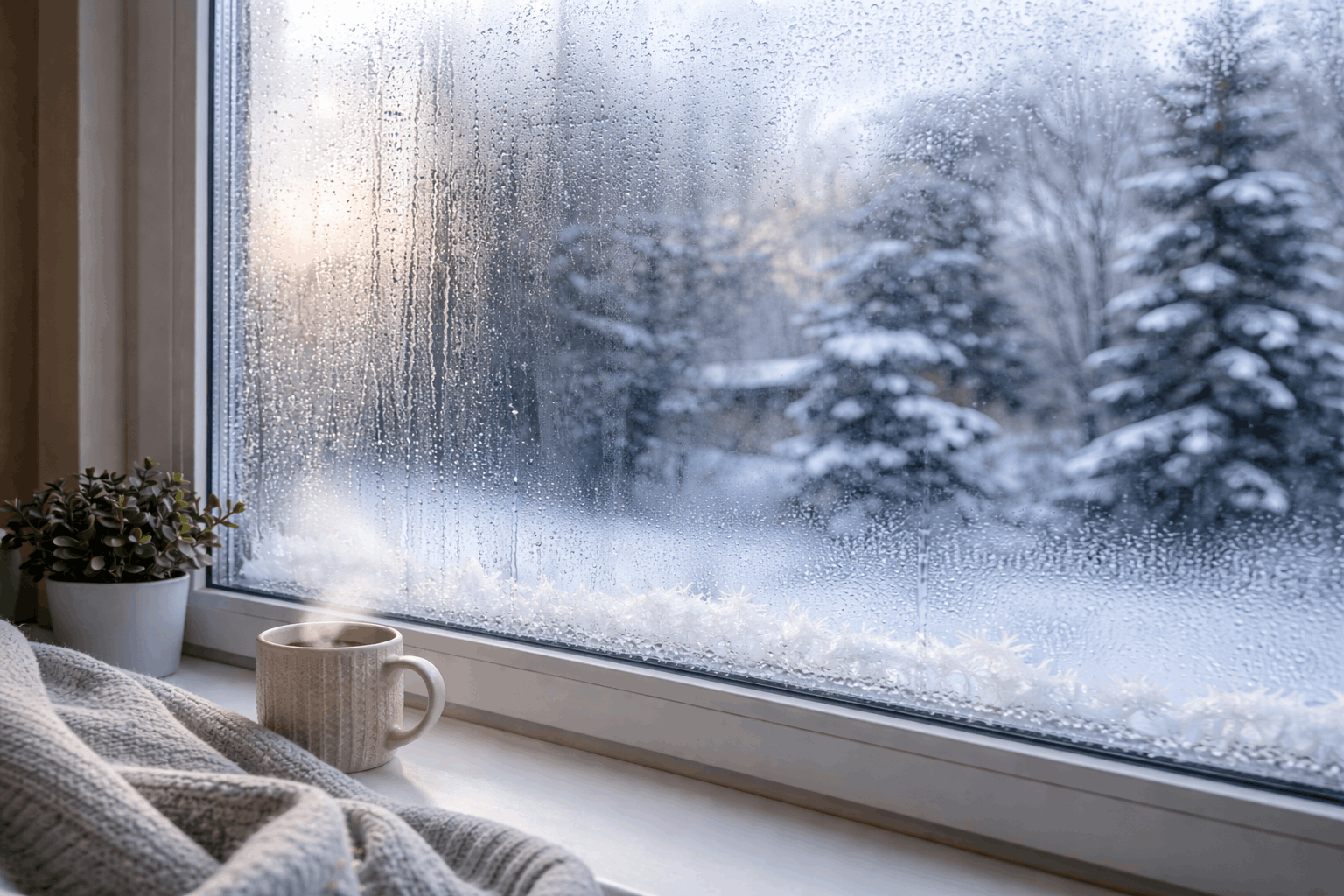
One day your windows look fine, the next morning you see fog, droplets, or even frost at the corners.
Some condensation can be normal during cold snaps. Persistent moisture, however, can signal indoor humidity issues, air leakage,
or building-envelope problems that may lead to damaged trim, peeling paint, and mould risk.
Health Canada flags high indoor humidity as a key contributor to mould growth.
This guide breaks down what is normal, what is not, and what GTA homeowners can do right away.
What Condensation Actually Is and Why Winter Makes It Worse
Condensation forms when warm, moisture-laden indoor air contacts a surface cold enough to fall below its dew point.
According to ENERGY STAR, when the interior glass temperature drops below the dew point of indoor air, water forms on the surface.
- Indoor moisture level (relative humidity)
- Window and frame surface temperature
The U.S. Department of Energy notes that air movement is the primary driver of moisture transport in homes. Even small air leaks around windows
can create localized condensation and ice.
The GTA Factor: Why Condensation Feels Worse Here
- Frequent freeze-thaw cycles
- High indoor moisture from showers, cooking, and laundry
- Lakeshore and valley humidity conditions
The Canada Mortgage and Housing Corporation (CMHC) notes that homes in humid climates near lakes or river valleys often require higher condensation resistance.
Where The Condensation Appears Matters
| Location | What it usually means | Normal? | First step |
|---|---|---|---|
| Inside glass, light fog | Cold glass plus indoor humidity | Often normal | Improve airflow, lower RH |
| Inside glass, dripping | Excess humidity or air leakage | Problem if frequent | Measure RH, verify fan venting |
| Frost at edges | Cold zones plus leakage | Monitor closely | Reduce RH, seal perimeter |
| Between panes | Sealed unit failure | Not normal | Professional glass replacement |
What’s Normal and What Is Not
According to BC Housing, condensation becomes a problem when it persists or wets materials that can be damaged.
Usually Normal
- Light fogging that clears quickly
- Condensation after showers or cooking
- Minor edge condensation during short cold snaps
A Real Problem
- Daily dripping or pooled water
- Wet trim or bubbling paint
- Musty smells or staining
- Moisture between panes
The Number One Cause in GTA Homes: Humidity Is Too High
Comfort humidity and condensation-safe humidity are not always the same in winter.
Save on Energy Ontario recommends lower winter humidity to reduce condensation risk.
| Outdoor conditions | Target indoor RH | Why |
|---|---|---|
| Mild winter | 35% to 45% | Comfort without excess moisture |
| Typical cold | 30% to 40% | Reduces dew point |
| Extreme cold | 25% to 30% | Prevents frost formation |
If you do nothing else, buy a hygrometer and stop guessing.
Airflow and Air Leakage: The Silent Villains
Window Coverings
CMHC notes that heavy curtains and blinds can trap cold air against glass.
Leave a small opening at night to allow airflow.
Perimeter Air Leaks
Small gaps around the frame can dramatically drop surface temperatures.
Check weatherstripping and interior trim for gaps.
Ventilation Still Wins
- Vent dryers outdoors
- Confirm bath and kitchen fans vent outside
- Run fans during use and 20 minutes after
But My Windows Are New
Even high-performance windows can experience condensation if indoor humidity is high
or installation sealing is poor.
ENERGY STAR confirms that no window is immune under extreme conditions.
When To Call A Window Professional
- Condensation between panes
- Soft drywall or rotting trim
- Ice returning daily
- Persistent drafts
Get a GTA-Specific Solution
Aztech Doors & Windows specilizes in windows replacements across the greater Toronto area.
Start with the AZTech Window Cost Calculator or book a professional assessment.